
The Muscle Tendon Change, (Yi Jin Jing) is one of the most renowned systems of Shaolin Qi Gong (Nei Gong) in the world.
This system comes from the highly sought after Gu Ru Zhang lineage of martial arts, Shaolin Nei Gong, and Iron Palm training.
Yi Jin Jing practice develops the skills and practices necessary for cultivating a profound change in your bodies tissues, called an Embodied Elixir (Wai Dan). This tissue and Qi transformation becomes a source of power and longevity. This also generates incredible strength, agility, and metabolic health.
Whether or not you want to build muscle mass is up to you – this system can be tailored to almost any outcome.
What I teach also incorporates some advanced aspects of Traditional Chinese medicine and leading-edge exercise physiology. Knowing what is happening under a microscope helps each of us direct our practice towards any of the probable outcomes, in the order you choose.
The Six Pillars of Shaolin
Shaolin Nei Gong is an integrated system with six foundational pillars.
This training focuses on the first four pillars, which every practitioner needs to progress on their chosen path of cultivation. The last two are taught to martial artists or healers when they are ready.

Wall Staring Chan
Bi Guan Zuo Chan — Seated wall staring meditation cultivates awareness without anticipation, distraction, or any desire for another experience. The wall becomes an inexhaustible teacher. We learn five progressive methods from mental stillness to the Mystery Gate.
Muscle Tendon Change
The Twelve Gestures of Wei Tuo — teaches structure and pliability. The foundational Yi Jin Jing form becomes the container for whole-body connective tissue transformation. This is where Myofascial Tensegrity begins. This is where we learn the language of embodied awareness.

Strength and an External Elixir
Tan Fu’s External Elixir Routine — Shaolin strength and tensegrity training involves isotonic, isometric, and isokinetic exercises, integrated with resistance training. This balances the tissue lengthening process, increasing muscle, tendon, and fascia density and function.

Bone Marrow Washing
Xi Sui Jing — introduced through Daoist Heavy Hands in the Winter of Year One. More meditative than physically active. We learn advanced breathwork (Bone Breathing, Tortoise Breathing), and nuanced micro-movements, to begin the deeper alchemic process.

Fa Jin, Iron Palm & Iron Body
Shaolin power development and body conditioning are at the highest levels of martial practice.

Inner Power for Healers (Nei Jin)
Shaolin Nei Jin Gong is the highest level of Qi cultivation for those in the healing arts.
The Twelve Gateways of Shaolin Nei Gong
In the first year, each of these practices, or gateways to skills and benefits, are necessary to have a complete practice.
Each gateway progresses through a sequence of levels, challenges, and opportunities. Each practice is also a responsibility to develop and carry like a sacred text or powerful object.
Dao Yin/Qi Gong
Every class begins with some standing mind/body connection and expression practices. This creates a progressive self-assessment for connective tissue integrity.
12 Wei Tuo Gestures
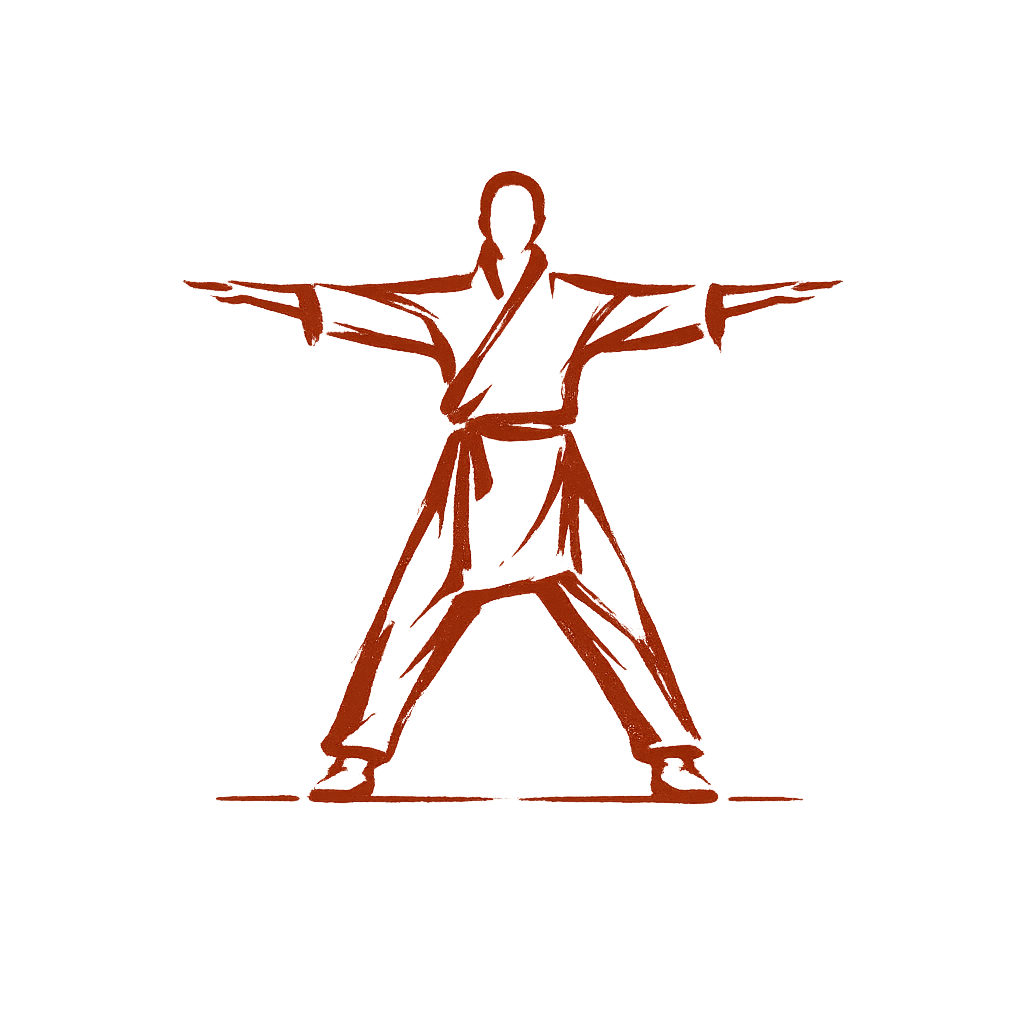
The Twelve Gestures of Wei Tuo — teaches structure and pliability. The foundational Yi Jin Jing form becomes the container for whole-body connective tissue transformation. This is where Myofascial Tensegrity begins. This is where we learn the language of embodied awareness.
The Nine Interactive Layers
This sequential process of resistance, progressive relaxation, release, pandiculation, pore breathing, and inner Qi restoration changes the practice from basic exercises to whole body tissue transformation.
Yang Sheng Fa
Nourishing Vitality through a supportive and seasonal diet, traditional herbs, liniments, and Pai Da (percussive massage), ensure your progress. This makes training YUMMY!
External Elixir Form
Isotonic, isometric, and isokinetic training are integrated with structural awareness and breathwork. This form develops strength and collagen density without sacrificing pliability.
Kettlebells & Gymitations
This resistance training system uses weights, body weight, momentum, and stillness under load, to maximize tissue integrity. Some practices can be done anywhere and anytime, some need kettlebells.
Staff Stretching
An 18-gesture staff stretching routine that offers a physically supported reawakening of tone and pliability. A staff can become an extension of your body in many ways.
Floor Work
Opening your hips, waist, and spine gradually, with core tone and increased body awareness ensure that you can develop whole body strength and connection.
Daoist Heavy Hands
There are very few ways to learn and cultivate a Bone Marrow Washing practice. This sequence of standing interactive postures can cultivate Jing for internal or external cultivation.
Wall Staring Chan
Chan /Zen meditation comes from the Shaolin tradition. Modern minds need to settle before coherent Yi (attention and intention) is possible.
Breathwork
Advanced breathwork practices are essential in Year One. Breathwork is a doorway into the subtler levels of the Nei Gong practice.
Circuit Training
Whole-body conditioning sequences that integrate all angles of tissue contraction, release, and structural challenges. These routines allow you to focus on many levels of training.
Year One
Foundation, Transformation, and Embodied Ease
Learn the complete system of practices in Year One. Repair, rebuild, and balance your connective tissues. Cultivate the foundation of Myofascial Tensegrity and the meditative patience refine it.
- 12 Gestures of Wei Tuo (Yi Jin Jing Form)
- Tan Fu's External Vigor
- Daoist Heavy Hands - Bone Marrow Washing — introduction
- Shaolin Seated Wall Staring Meditation (Five-method Chan)
- The Nine Interactive Layers of Yi Jin Jing
- Dao Yin Standing Warmups, Standing Meditation, and Settling Practices
- Stone Locks (or Kettle Bells) – Circuit Training
- Floor Work for Core Tone and Flexibility
- 18 Gesture Staff Stretching Form
- Gymitations One – Isotonic and Isokinetic exercises for the Primary Muscles
- Nourishing Your Tissues with Diet, Herbs and Lifestyle Yang Sheng
- Liniments and Self Massage (Pai Da One)
- 100-day dedicated practice period
If you choose to continue into Years Two and Three, the path deepens considerably.
You can decide after you have experienced what Year One involves, asks for, and gives back.
Ancient Knowledge and Modern Research

These practices have been refined for over hundreds of years of empirical practice, observation, and evolution. Modern clinical science has begun to confirm, and in some cases offers new possibilities. This course presents both, combining the oldest texts with the most recent advances in the science of connective tissue, fascia, interstitial fluids, and human potential.
“It is the responsibility of every generation to improve the understanding of the art”.
Through a Classical Lens
Connective Tissue
All contractile, elastic, structural, and fascial tissue; from gross muscle through to interstitial micro-filaments. Jin (筋) is an expression of Liver Jing taking physical form.
Tissue Potential and Essence
Your deepest reservoir of vitality is stored in Kidneys, Bone Marrow, and Brain. Yi Jin Jing practice rebuilds all of your tissues and refines your Jing (精) reservoir rather than depleting it.
Coherent Interactive Awareness
This trained capacity of attention and intention (called Yi Nian 意念) guides transformation from within. Without a coherent mind, the inner aspects of training are impossible. Year One focuses on developing this capacity through meditation and refined interactions with every deepening repetition.
Interstitial Spaces and Filaments
The spaces, pores, and interstices between your skin, muscles, and organs is where Qi and fluids circulate (called Còu Lǐ 腠理). The classical equivalent to modern science’s interstitial and extracellular matrix (ECM), micro-filaments, and extracellular fluid system.
Through a Clinical Lens
Pandiculation
Myofascial Tensegrity
Fibroblasts and Osteocalcin
A Liquid Crystal Internet and Antenna
Dr. Michael Smith, (Dr.TCM, FDN-P)
Clinician, Professor, Martial Arts and Qi Gong Teacher
Doctor
Warrior
Qi Gong /Nei Gong
I will always be a student first. I teach several Qi Gong courses and two systems of Nei Gong.
I have trained in the martial arts, meditation, and Qi Gong for 48 years. I began training in formal lineages, and the Yi Jin Jing 40 years ago. I have been a Doctor of TCM and a professor for 30 years.
A Living Generational Relationship.
A Long River of Transmission
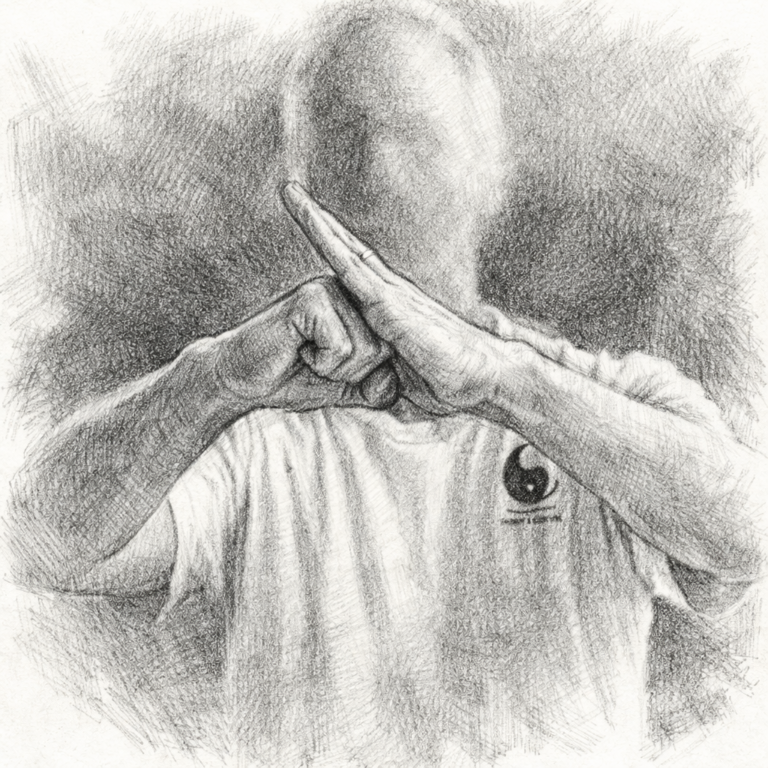
Northern Shaolin Yi Jin Jing
Grandmaster Gu Ru Zhang (1894–1952) taught a Northern Shaolin (Ten Road Tan Tui) lineage and was known as one of the Five Tigers of the North. Gu Shifu was respected for both the external and internal Shaolin arts. His lineage integrates martial power, Nei Gong, and a complete Yi Jin Jing system.
Yi Dao Huan Yuan Tradition
Prof. Leung Kok Yuen was of a fourteenth-generation inheritor of a village tradition of Chinese Medicine and Daoist Cultivation (Xiu Dao). The term Yi Dao Huan Yuan means returning to the source through the practice of healing. Professor Leung’s transmission integrates classical TCM theory and inner cultivation at the highest level.
Contemporary Yi Jin Jing Training
Together, alone, and in group peer pods
I have come to teach a very integrated and progressive approach. We learn three traditional forms, a sequential nine-step process of resistance and release, Stone Lock/Kettlebell training, Chan/Zen meditation, dietary and herbal support, and the progressive journey from connective tissue restoration through to Bone Marrow Washing. These are not gentle wellness practices.
They require consistent and coherent physical engagement – through a precise sequence of interactions. They will change your body — in ways you can both feel and measure.
Live Group Teaching
Video Module Library
Complete pre-recorded demonstrations and guided practice for all twelve Year One curriculum elements. They are available on demand after their scheduled release dates.
Course Manuals
Seasonal Alignment
Most traditional lineages recommend a clear structure based on a seasonal practice. Each season offers unique gifts and challenges. This reawakens an innate ability to sense Qi.
Yang Sheng Guidance
A seasonal diet and herbal tonics improve your health and your Jing. Self-massage routines, liniment guidance, and other practices to support the tissue transformation process.
Peer Practice and your Training Journal
Committing to a Year of Training
Is this training right for you?
If you have experience with a regular embodiment practice (martial arts, qigong, yoga, dance, meditation) and are invested in learning whole body Myofascial Tensegrity (Yi Jin Jing), then I invite you to join me and the class of 2026.
If you are a martial artist clinician, therapist, or healer who wants to develop the inner capacity to sustain your endeavor of helping others – without depleting your own Jing, I do not know of a better resource. This could also add 10 years to your career, or to your play time.
Take a moment and ask two questions.
Are you ready to commit to a year of structured, sequential, progressive learning with a system that combines the oldest texts and the newest science.
Are you willing to experience the next level of your potential? Being ready to train is step one, step two is recognizing that transformation takes willpower. The willpower to move courageously through the changes and challenges you meet along the way.
The outcome is the experience of becoming your practice.
The investment for year one
$1,647 (includes Taxes)
3 payments of 575